

Most people don’t struggle with style because they lack good clothes. They struggle because they’re missing a repeatable system for putting those clothes together with confidence, morning after morning, occasion after occasion. Trend cycles move fast, but the fundamentals of building a good outfit barely change — and once you understand them, getting dressed stops being a daily guessing game.
This guide walks through the practical, tested principles that stylists rely on, broken into steps you can actually apply the next time you’re standing in front of your closet.
If you want more article visit: Addbusiness
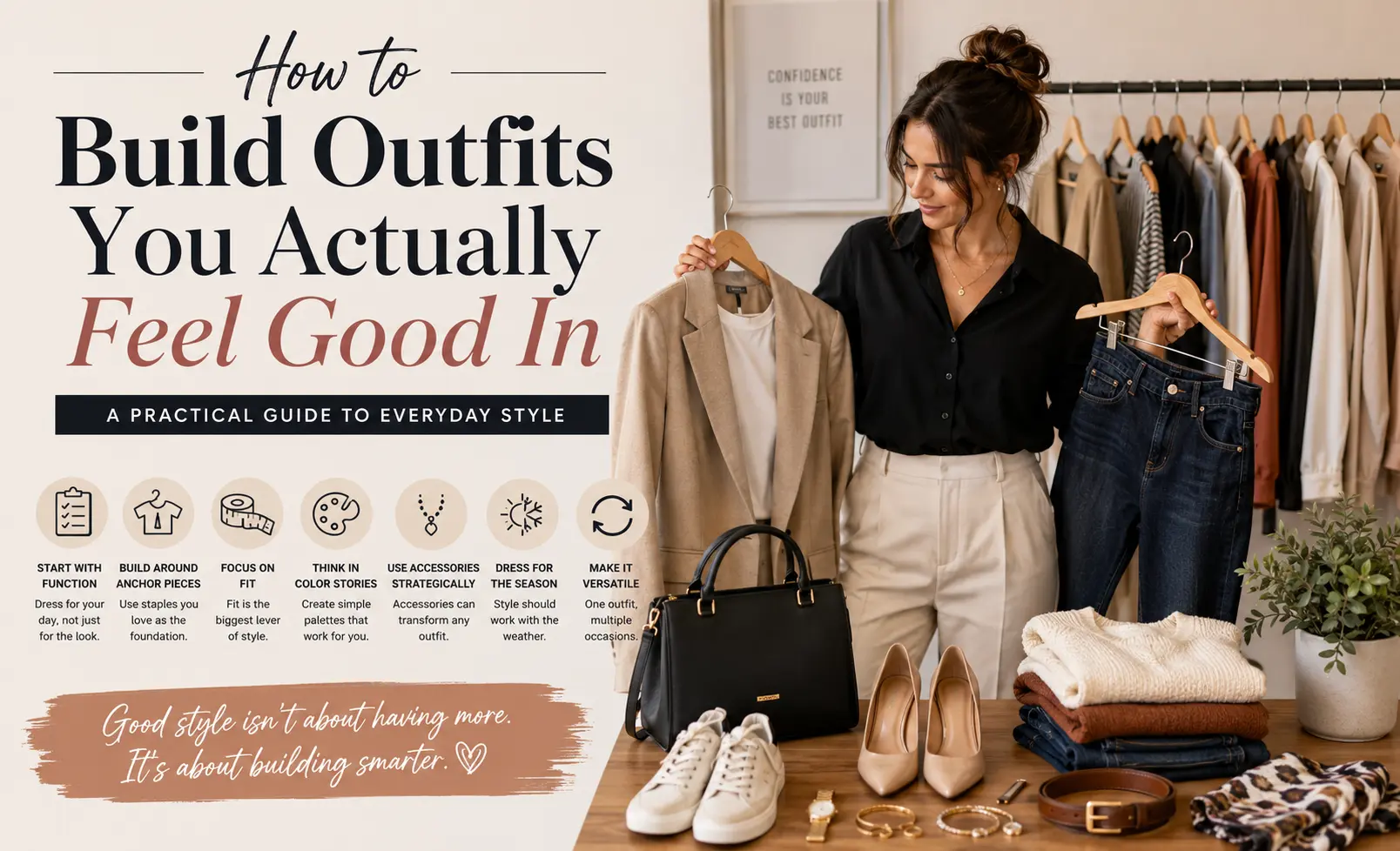
Start With Function, Not Fashion
Before thinking about color or trend, the first question worth asking is simple: what does this outfit need to do today? A workday full of meetings, a long day of errands, a dinner out, and a lazy weekend at home all call for different foundations, even if your personal style stays consistent across all of them.
Skipping this step is the most common reason outfits feel “off” even when every piece is objectively nice. A beautiful silk blouse is the wrong choice for a day of manual errands, just as an oversized hoodie undercuts an outfit meant for a client meeting. Matching function to the day removes an entire category of style mistakes before you’ve even picked a color.
Build Around a Few Reliable “Anchor” Pieces
Rather than treating every outfit as a fresh puzzle, it helps to identify a small set of anchor pieces — items you already know fit well, feel comfortable, and photograph nicely — and build outfits around them. This might be a well-tailored blazer, a pair of dark jeans that fit perfectly, or a dress with a cut you always feel confident in.
Anchoring outfits this way does two things: it cuts down on decision fatigue, since you’re not starting from zero each time, and it naturally keeps your personal style consistent, since the same handful of pieces show up in slightly different combinations throughout the week.
A simple way to identify your own anchors: think back to the last few times you got a compliment or just felt genuinely good in an outfit, and look for the piece that shows up most often across those memories.
Fit Is the Single Biggest Lever
If there’s one principle that stylists repeat more than any other, it’s this: fit matters more than trend, fabric, or even color. A basic t-shirt and jeans that fit properly will consistently look more polished than an expensive, trend-forward outfit that doesn’t sit right on your frame.
A few fit checks worth running through before leaving the house:
- Shoulder seams on tops and jackets should sit at the natural shoulder line, not drooping past it or pulling tight.
- Trouser hems should break cleanly at the shoe, without excessive pooling or riding too short.
- Waistlines should sit where the garment is designed to sit, rather than rolling down or bunching up through wear.
- Fabric should skim the body’s natural shape rather than clinging tightly everywhere or hanging shapelessly.
If a piece needs constant adjusting throughout the day, it’s working against you no matter how good it looks in a mirror at home. Tailoring — even simple, inexpensive adjustments — often does more for an outfit’s overall look than buying something new.
Think in Color Stories, Not Single Colors
Instead of choosing colors piece by piece, it’s more effective to think in terms of a small, coordinated palette — typically two to three colors you already know work well together. A neutral base (black, white, navy, tan, olive, gray) paired with one accent color creates outfits that read as intentional rather than random.
If you naturally gravitate toward bold colors, let one piece carry the statement — a jacket, a bag, or a bold shoe — while the rest of the outfit stays quieter. This avoids outfits that feel visually competitive, where multiple loud elements are all trying to be the focal point at once.
A useful habit: keep a running mental note (or an actual note on your phone) of color combinations you’ve worn and genuinely liked. Over time, this becomes a personal reference guide that’s far more useful than generic color-wheel advice, because it reflects what actually suits you.
Let Accessories Do the Heavy Lifting
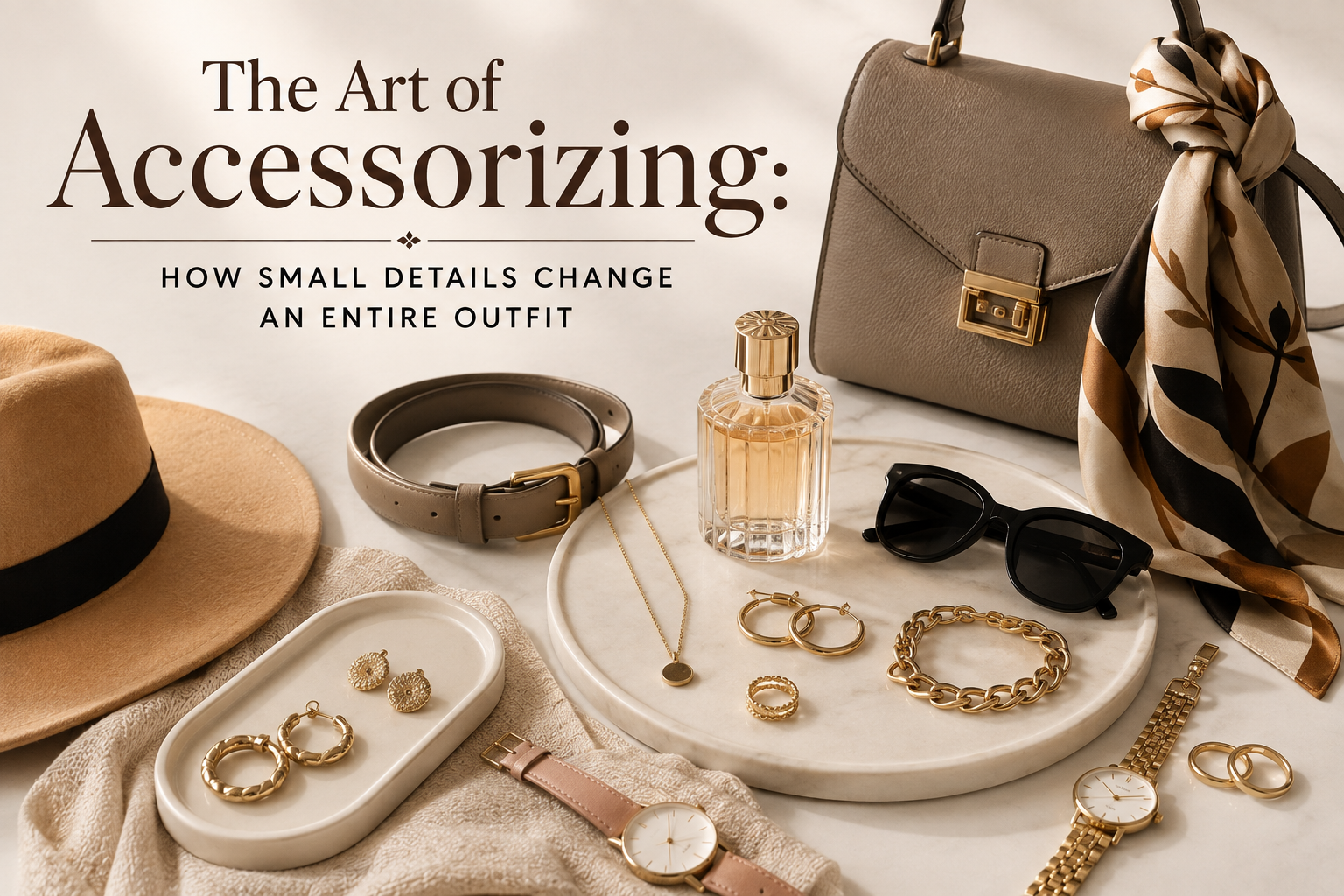
One of the most efficient style habits is learning to change the mood of an outfit through accessories rather than buying entirely new clothes for every occasion. The same base outfit — say, a simple dress or trousers with a fitted top — can read as casual, polished, or dressy depending almost entirely on what you add to it.
- To dress an outfit up: add structured jewelry, a heeled shoe, or a more formal bag.
- To dress an outfit down: swap to minimal jewelry, a crossbody bag, and a flat or sneaker.
- To add personality: a patterned scarf, a bold lip color, or a statement earring can make a familiar outfit feel new again.
Thinking of accessories as adjustable variables — rather than an afterthought — is one of the fastest ways to get more mileage out of a smaller wardrobe.
Dress for the Season, Not Just the Look
An outfit that photographs beautifully but leaves you uncomfortable in the actual weather rarely feels as good in person as it does in a photo. Building in seasonal awareness keeps outfits functional as well as stylish.
Warmer months call for breathable fabrics — cotton, linen blends, and lightweight knits — that hold their shape without leaving you visibly overheated by midday. Cooler months are an opportunity to build outfits around a well-fitted coat or jacket, which often does more visual work than anything worn underneath it. Layering strategically — pieces that can come off if a space is warm, or added if it’s not — keeps you adaptable without sacrificing the overall look.
Making One Outfit Work Across Multiple Settings
A skill worth building deliberately is the ability to stretch a single outfit across more than one setting in the same day, without it feeling mismatched in either context. This matters more than people realize, since most days involve some mix of work, errands, and social time, and re-dressing completely for each one isn’t always realistic.
The trick lies in choosing a base outfit with enough neutrality to move between contexts, then using small, fast adjustments to shift the tone:
- Work to evening: Swap flats for heels, add a bolder lip or earring, and remove or add a blazer depending on the direction you’re shifting.
- Errands to a casual outing: A structured bag swapped for a crossbody, and a simple hair change, can shift the whole feel without changing the outfit itself.
- Daytime to dinner: Layering a going-out top under a daytime blazer means the blazer comes off later, revealing a dressier look underneath without needing a full outfit change.
Keeping one or two “transition pieces” — a blazer, a versatile bag, a pair of heels that fold flat — in your bag or car on busier days removes the need to plan two separate outfits from scratch.
Shopping With Intention Instead of Impulse
A wardrobe full of outfit combinations that actually work is built through intentional shopping rather than frequent impulse purchases. A few habits make a noticeable difference over time:
- Shop with your anchor pieces in mind. Before buying something new, consider whether it pairs with at least two or three things you already own. If it doesn’t, it’s likely to sit unworn.
- Prioritize versatility over novelty. A piece that works for both casual and slightly dressed-up occasions earns its place in a wardrobe faster than a single-occasion piece.
- Give yourself a short waiting period. A day or two between seeing something and buying it filters out most impulse purchases that wouldn’t have gotten regular wear anyway.
- Reassess seasonally, not constantly. Going through what you own once each season — rather than reacting to every new trend — keeps the wardrobe cohesive and prevents duplicate purchases.
None of this requires a large budget. It simply means the effort goes into thoughtful choices rather than volume, which tends to produce a more functional, better-fitting wardrobe over time.
A Repeatable Framework for Getting Dressed
If you want a system you can return to instead of starting from scratch every day, these four questions cover most of what matters:
- What does today actually require? (Comfort, formality, movement)
- Which anchor piece do I want to build around? (A jacket, dress, or trouser you already trust)
- What’s my color story for today? (Neutral base plus one accent, or one bold piece with quiet supporting pieces)
- Does this still work with the weather and my schedule?
Running through this quick mental checklist takes less time than scrolling through inspiration photos, and it tends to produce more consistent, wearable results.
Building a Capsule That Actually Works for You
A capsule wardrobe — a smaller, curated set of pieces that mix and match easily — is one of the most effective ways to apply everything above without constant new purchases. The key isn’t owning fewer clothes for its own sake; it’s making sure the pieces you do own actually work together.
A practical way to build one:
- Choose one or two neutral base colors for the bulk of your pieces (bottoms, outerwear).
- Add two or three accent colors you genuinely enjoy wearing.
- Prioritize pieces that can shift between casual and slightly dressed-up with a change of accessories.
- Fill gaps intentionally rather than buying whatever’s trending, focusing on pieces that connect to items you already own.
Over time, this approach naturally produces more outfit combinations from fewer pieces, since everything is designed to work together rather than existing as one-off purchases.
Common Mistakes That Undercut a Good Outfit
A few patterns come up again and again when outfits don’t land the way people hoped, even with nice individual pieces:
- Buying for the trend cycle instead of the wardrobe. A trendy piece that doesn’t connect to anything else you own gets far less wear than one chosen with existing pieces in mind.
- Ignoring fit in favor of price or brand. An expensive piece that doesn’t fit well will always look less polished than an affordable piece that’s tailored properly.
- Overloading on statement pieces. More than one true “loud” element per outfit tends to compete rather than complement.
- Dressing for the photo instead of the day. An outfit that looks great in a still image but is uncomfortable to actually move in works against you over several hours.
- Skipping the weather check. Beautiful outfits lose their impact fast if you’re visibly too cold or too warm.
Frequently Asked Questions
How many outfits do I actually need to feel like I have “options”?
Fewer than most people think. A handful of well-fitted anchor pieces, mixed with a small rotation of accessories, typically produces more usable combinations than a large wardrobe of one-off pieces that don’t connect.
Should I follow trends at all?
Trends can be fun to incorporate, but they work best layered onto a foundation of well-fitting basics rather than replacing that foundation. A single trend piece added to a reliable outfit tends to feel more wearable than a fully trend-based look.
What’s the fastest way to improve how my outfits look overall?
Focus on fit before anything else. Tailoring existing pieces or being more selective about sizing tends to produce a bigger visible improvement than buying new clothes.
How do I figure out what colors actually work for me?
Look back at outfits you’ve genuinely felt confident in and note the recurring colors. This tends to be a more reliable guide than generic color theory, since it reflects what you actually feel good wearing.
Is it worth investing in a few expensive pieces versus many cheaper ones?
It depends on how often the piece will be worn. A frequently-worn anchor piece (a blazer, trousers, a coat) is usually a better investment than a low-cost piece bought for a single occasion, since cost-per-wear drops significantly with regular use.
Final Thought
Good style isn’t about owning more clothes or chasing every new trend — it’s about understanding a few consistent principles (function, fit, color coordination, and smart accessorizing) and applying them repeatedly. Once those fundamentals click, getting dressed becomes far less about guesswork and far more about a system that works for your actual life.
For a deeper breakdown of outfit formulas by occasion — including work-appropriate looks, casual everyday combinations, and going-out styling — Style Blooming’s outfit ideas guide walks through complete looks and styling notes across a range of settings.
If you want Read more fashion related article visit “Style Blooming“