



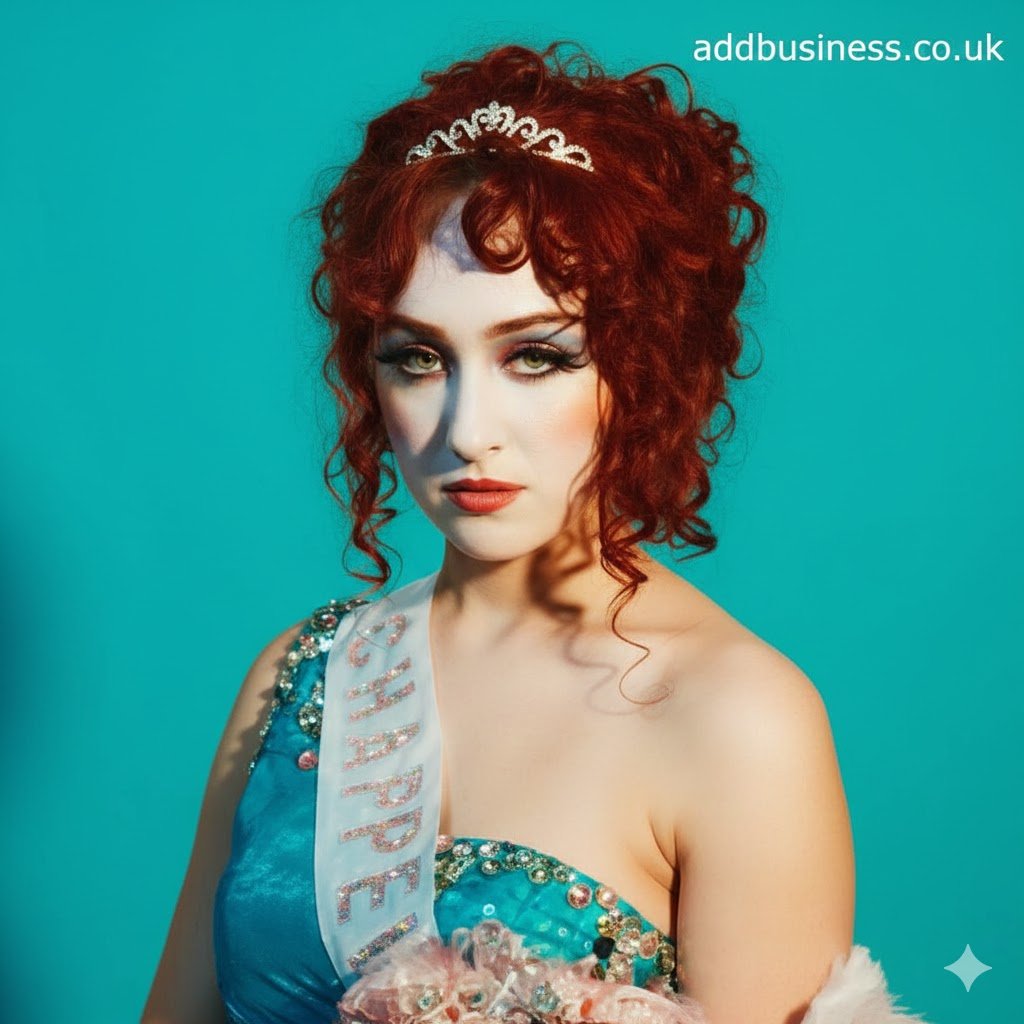
The world of pop music is no stranger to artists who use their personas to explore, challenge, and expand boundaries. Chappell Roan, a rising star known for her eclectic sound, theatrical performances, and drag-inspired aesthetic, is one such artist. Her style, stage presence, and overall image have led to a significant amount of discussion and curiosity about whether she fits the label of a drag queen. With a bold, campy persona and fashion choices that blur gender lines, it’s easy to see why fans are asking: Is Chappell Roan a drag queen?
This question comes up frequently in the context of her theatrical music videos, gender-fluid fashion, and over-the-top performances. While she isn’t a drag queen in the traditional sense of the term, the drag-inspired elements in her music and performances are undeniable. But what does Chappell Roan herself have to say about this? Does she consider herself a drag queen, or does her identity transcend traditional categories?
In this article, we’ll take a deep dive into Chappell Roan’s career, her artistic evolution, her relationship with drag culture, and what makes her a standout figure in today’s music scene. By exploring her persona, performance style, and the cultural influences that shape her, we’ll answer the question: Is Chappell Roan a drag queen?
Who Is Chappell Roan?
Born Kayleigh Rose Amstutz on February 19, 1998, in Willard, Missouri, Chappell Roan’s journey to stardom was not a traditional one. Willard, a small rural town in the heart of America, was far removed from the entertainment hubs of places like Los Angeles or New York. Growing up in a place with few artistic outlets, Roan turned to music as an early form of expression. She began by posting cover songs and original tracks on YouTube, garnering a small but dedicated following as she developed her talent.
Her big break came when she signed with Atlantic Records at the age of 17. But despite the label backing her, Roan faced challenges when her early releases didn’t find commercial success. After being dropped from the label, Roan took matters into her own hands, producing new music and establishing a more authentic, independent artistic direction. It was during this period that Roan began to embrace her drag-inspired aesthetic, combining it with her pop and indie musical influences to create something fresh and exciting.
Roan’s breakout moment came with her debut album The Rise and Fall of a Midwest Princess (2023). The album introduced fans to Roan’s distinct sound and performance style — a blend of catchy pop anthems, empowerment, and drag culture influences.
What Is Drag?
To understand the connection between Chappell Roan and drag culture, it’s important to understand what drag really is. Drag is an art form that involves performers — usually cisgender men — who exaggerate femininity by dressing in women’s clothing, wearing dramatic makeup, and often adopting larger-than-life personas. Drag queens, specifically, use performance to express gender fluidity and subvert traditional gender norms.
Drag is not simply about dressing up in extravagant clothes; it is an art form that celebrates freedom, self-expression, and gender exploration. Drag queens perform with confidence and boldness, often pushing boundaries to challenge societal norms. The culture surrounding drag is deeply rooted in LGBTQ+ communities, where it serves as both a cultural movement and a celebration of individuality.
In recent years, drag has expanded beyond traditional boundaries. While the drag community was historically comprised mainly of cisgender men, drag is now an inclusive space for cisgender women, nonbinary individuals, and gender-fluid performers. Drag, in its modern form, is about embracing all identities and exploring the fluidity of gender.
Chappell Roan and Drag: A Complex Relationship
While Chappell Roan is not a drag queen in the traditional sense, her art is undoubtedly influenced by drag culture. Roan does not engage in drag performance competitions or identify as a drag queen herself, but she certainly draws inspiration from the world of drag, especially in terms of fashion, makeup, and performance style.
So, is Chappell Roan a drag queen? The answer is no — at least not in the traditional sense. But the influence of drag culture on Roan’s career is undeniable, and it shapes much of her artistry. Here’s how:
1. Makeup and Fashion: Drag-Inspired Aesthetics
One of the most significant ways Roan draws from drag culture is through her bold makeup and exaggerated fashion choices. Drag queens are known for their elaborate makeup that dramatically alters their features, particularly in the areas of contouring, eyeliner, and false lashes. Roan has embraced this style, using makeup to create a larger-than-life persona. Her makeup often involves heavy contouring, vibrant eye colors, and dramatic highlights, all of which are signature elements of drag queens’ transformations.
When it comes to fashion, Roan’s style is gender-fluid and androgynous, drawing from both feminine and masculine fashion. She wears flamboyant outfits that include tailored suits, sparkly dresses, and high-fashion accessories. These clothing choices reflect drag culture, where performers mix and match styles, subverting traditional gender expectations. Roan embraces this fluidity, just as drag queens do when they take on exaggerated, over-the-top personas.
2. Performance Style: Camp and Theatricality
Drag queens are known for their campy and theatrical performances, where humor, exaggeration, and dramatic storytelling are at the forefront. Roan’s performances, while not necessarily comedic, are theatrical and larger-than-life in a way that mirrors drag performances.
Roan’s live shows feature high-energy choreography, bold movements, and dramatic staging, all of which add a performative, theatrical element to her music. While drag queens often use their performances to express humor and satire, Roan uses her dramatic stage presence to celebrate themes of gender fluidity, self-empowerment, and self-expression — themes that are central to drag culture. Her performances are not just about singing; they are visual spectacles that reflect her artistic identity, much like the performances of drag queens.
3. Self-Expression and Gender Fluidity
Drag culture thrives on self-expression and the exploration of gender fluidity. Drag queens use their performances to challenge societal norms around gender and to express aspects of their identity that don’t fit within conventional gender roles. Roan has embraced this same sense of gender fluidity in her music and persona.
Her lyrics, while pop in nature, often explore themes of gender nonconformity, queer identity, and personal empowerment. For instance, her song “Pink Pony Club” is an anthem of queer self-empowerment, celebrating the freedom to express one’s true identity in queer spaces. Much like drag queens who celebrate their authentic selves on stage, Roan uses her platform to explore her own identity, breaking free from societal expectations about gender and performance.
What Has Chappell Roan Said About Drag?
Although Roan’s work clearly draws from drag culture, she has been open about her own identity and relationship with drag. In interviews, Roan has said that while she is inspired by drag, she does not identify as a drag queen. She has never performed in the traditional drag queen format and has no intention of doing so.
Roan has acknowledged that drag culture has had a profound influence on her artistry, particularly in the areas of fashion, makeup, and performance style. She has mentioned in interviews that her bold aesthetic choices are directly inspired by drag queens, but her performances are about self-expression and personal empowerment, rather than traditional drag performance.
Roan has also expressed her respect and admiration for the drag queens who have shaped her artistry. She sees drag as a form of artistic expression, but she doesn’t consider herself to be a drag queen. Instead, Roan positions herself as a pop artist who uses elements of drag to create a unique visual identity and artistic experience.
Chappell Roan’s Impact on Drag and Pop Music
Chappell Roan’s career represents the intersection of pop music and drag culture, where both forms of expression can coexist and enrich one another. By embracing drag-inspired elements in her music and performances, Roan has become a trailblazer for artists who want to explore gender fluidity, self-expression, and queer visibility in their work.
Roan’s music continues to inspire audiences who identify with the queer community and gender nonconformity. Her drag-inspired aesthetic has become a key part of her artistic identity, allowing her to connect with a broader audience that appreciates empowerment, authenticity, and gender exploration in pop music.
Her success in mainstream pop shows that drag-inspired artistry can thrive within the commercial music world, paving the way for other artists to experiment with similar themes in their work. Chappell Roan’s career is proof that drag culture is not limited to the drag queen community; it’s an influential art form that can inspire and shape the broader music landscape.
Conclusion: Is Chappell Roan a Drag Queen?
Chappell Roan may not be a drag queen in the traditional sense of the term, but there’s no doubt that she draws heavy inspiration from drag culture in her music and performances. Her gender-fluid style, bold makeup, and theatrical performances reflect many of the principles of drag, but Roan uses these elements as part of her own artistic vision.
Roan’s ability to merge pop music with drag-inspired aesthetics has made her a standout artist in today’s music scene, and she continues to inspire others in the queer community and beyond. She is unapologetically herself, using her platform to explore gender identity, self-expression, and empowerment in ways that reflect the freedom and creativity that are central to drag culture.